Pages

Showing posts with label mental illness. Show all posts

Monday, April 11, 2016

Mental Illness Month Blog Hop - May 2016


Back with my old blog, I always wanted to host a Mental Illness month theme read; however, I have a mental illness of my own and always failed to follow through on my big plans. This year, I'm going to do it. Welcome to Mental Illness Month 2016. If anyone wants to join, during the month of May 2016 you can post a book review (or any sort of blog post about mental illness or suicide). Let me know what and when you've posted something, and I'll tell people to stop by and look at your post! This will be really informal, so you can join any time during the month of May, you don't have to sign up in advance. The book (movie) can be fiction or nonfiction. 
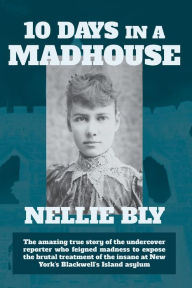


Masanobu from All the Pretty Books and I plan on reading 10 Days in a Madhouse, by Nellie Bly. If anyone wants to join in, we can do a group read, and I'll post questions about it the last week of May. 

Comment if interested! If you want to tweet about it, use the hashtag #mentalillnesshop

Friday, March 11, 2016

The Serpent King, by Jeff Zentner

The Serpent King, by Jeff Zentner
Dill is no stranger to hardship. He's dirt poor, financially supporting his mother, and seems to have zero future prospects. His father, a snake-handling preacher, is in prison; many of his former parishioners blame Dill. Yet Dill has two things that keep him getting up in the morning - his friends Travis and Lydia. The three are strikingly different but are pushed together by their mutual status as social outcasts. 

Friday, December 11, 2015

Suicide - An Overview


Suicide is a huge issue that is extremely stigmatized and ignored. It ranks among the 10 leading causes of death in most Western countries - and the number of suicides is likely higher than estimated since many deaths are ruled "accidental" rather than being given the stigmatized label of "suicide." 

Friday, November 27, 2015

Dialectical Behavioral Therapy


To supplement my post about borderline personality disorder (BPD), I'll comment on a highly effective therapy developed especially for BPD. I, myself, have been through DBT and can attest to its wonderful results. DBT is a modified form of cognitive behavioral therapy (CBT). CBT focuses on addressing cognitive distortions (thoughts that assume negative reasons for a potentially neutral situation) and practicing changing the way you think about the situation. DBT focuses on accepting the way you think, but changing the way you react to the thoughts. 

Wednesday, November 25, 2015

Borderline Personality Disorder


Borderline personality disorder (BPD) is in Cluster B, but I didn't discuss it in my Cluster B post because I think BPD deserves a post of its own. People with BPD have high impulsivity, drastic mood swings, terror of abandonment, and extremely volatile relationships. Such individuals also have self-images that vary significantly from one moment to the next. 

Sunday, November 22, 2015

Dissociative Disorders


Dissociation is when an individual is able to go through complex cognitive processes without explicit knowledge of what they are doing. Someone might suddenly become self-aware while in a completely unfamiliar place without having any idea of how they got there. The DSM-5 recognizes several types of pathological dissociation: depersonalization/derealization disorder, dissociative amnesia, dissociative fugue, and dissociative identity disorder.

Thursday, November 19, 2015

Crazy: A Father's Search Through America's Mental Health Madness, by Pete Earley

Crazy: A Father's Search Through America's Mental Health Madness,
by Pete Earley, Narrated by Michael Prichard 

When Pete Earley's son was diagnosed with schizophrenia Earley was devestated. His son's potential career was on the line, he wasn't willing to accept treatment, and he was generally unpredictable and very unsafe. When Earley tried to get his son into the hospital, his son was turned away because he didn't want to be treated - and laws say that unless someone is an immediate threat to himself or others, he can not be treated involuntarily. Earley had to pretend his son was a threat to Earley's well-being to get his son hospitalized. Then Earley went to a commitment hearing to make sure his son stayed in the hospital until he was better. Early was appalled by his son's defense lawyer who did her best to defend Earley's son despite his son's clear mental illness. In her own defense, the lawyer said it was her job to defend the rights of someone who did not want to be committed. Earley's son won the case and was released. 

Sunday, November 15, 2015

The Biological Effects of Anxiety on the Body


Stress and anxiety can wreak havoc upon your body. It can lead to problems with childhood physical development, and affect the immune, endocrine, gastrointestinal, and cardiovascular systems. It can exacerbate diabetes. Stress affects the mind as well, a tragic example being PTSD, where an individual might relive a traumatic event over and over. 

Stress can be either good or bad event - such as marriage or a divorce. Low levels of stress can actually be a good thing - for instance, a small amount of stress might help you prepare for an upcoming exam better than you otherwise would have. But sometimes stress becomes overwhelming, and biological systems in your body that would usually only slightly increase during "good stress," go into overdrive - potentially on a long-term basis. 

Wednesday, November 11, 2015

Tuesday, November 10, 2015

The Biology of Desire, by Marc Lewis

The Biology of Desire, by Marc Lewis, narrated by Don Hagen
Neuroscientist and former addict Marc Lewis writes an engaging study of the biological changes that occur in an addicted brain, complete with personal stories about himself and several addicts that he interviewed. Lewis points out that there are two major models for addiction - the disease model and the choice model - and argues why he believes the disease model has outlived its use and is now harming rather than helping addicts. 

Saturday, November 7, 2015

Personality Disorders - Cluster A


As mentioned in my opening post about personality disorders, personality disorders are split into three clusters: A, B, and C. This post will discuss the cluster A personality disorders. Cluster A disorders are characterized by distrust, suspiciousness, and social detachment. Often, people with cluster A personality disorders are considered eccentric or odd.

Wednesday, November 4, 2015

Personality Disorders - Clusters and Dimensions


Personality disorders are a difficult topic for me. For one thing, they are highly stigmatized. And I think the term "personality disorder" encourages that stigma by suggesting that there is something terribly wrong with a person's identity, rather than implying that people with these disorders respond to the world in a highly ineffective manner that creates problems for themselves and others. In fact, Butcher describes "personality disorder" in his textbook Abnormal Psychology as: characterized by "chronic interpersonal difficulties and problems with one's identity or sense of self." This description is good as long as we accept that the "problem with one's identity" is that one's self-esteem and view of one's relationships with others is unstable. 

Tuesday, November 3, 2015

The Noonday Demon, by Andrew Solomon

The Noonday Demon: An Atlas of Depression,
by Andrew Solomon, narrated by Barrett Whitener 

Noonday Demon is Andrew Solomon's amazing memoir / history of depression - it's a must-read for anyone who wants to delve deeply into the causes and effects of depression. Solomon begins with his own journey through several severe depressive episodes. For a broader personal understanding of depression, he intermittently includes stories of "depressives" that he's interviewed. In his research for this book, Solomon explored many standard therapies for depression (i.e. medicine, psychotherapy, cognitive behavioral therapy, electroconvulsive therapy, etc.); but he also explored some very atypical therapies such as an African ritual in which he lay naked and covered in goat blood while people danced around him with a dead chicken. (He actually found it very cathartic.) 

Sunday, November 1, 2015

Depression - an overview


Depression is a surprisingly common mental health issue, affecting 17% of Americans at some point throughout their lifetimes. Depressions almost always are a result of a stressful life event, though not all of these depressions are severe enough or long enough in duration to be considered a mood disorder. 

Tuesday, October 20, 2015

Post Traumatic Stress Syndrome - the Basics


I think we all have some idea of what we think PTSD is, but it turns out PTSD isn't as clear-cut as I thought.

Apparently, when PTSD was first introduced into the DSM, the diagnostic criteria required a traumatic event "outside the range of usual human experience" that would cause "significant symptoms of distress in almost anyone." That fits pretty well with my own perception of PTSD. Rape, war, torture, violent experiences...these all fit into that description. PTSD is a normal response to an abnormal stressor. 

Thursday, September 24, 2015

Brave New Films: This is Crazy


In a previous post, I discussed my thoughts on Frontline's New Asylums documentary, about the overcriminalization of the mentally ill. Millions of taxpayer dollars are being spent on housing the mentally ill in prisons, when they could be treated more affordably (and more humanely) by the community. Because that video (filmed in 2005) left me with a lot of questions, I looked up some more recent resources. Of the videos I watched, my favorite was a series created by Brave New Films.

Friday, September 18, 2015

Frontline: New Asylums


New Asylums (2005) is a Frontline documentary that delves into the problem of housing the mentally ill in prison systems. Believe it or not, the world's three largest asylums for mentally ill are the Cook County Jail in Chicago, the Twin Towers of the Los Angeles County Jail, and Riker's Island in New York. This problem has been escalating ever since the mid 1900's when deinstitutionalization of mentally ill and intellectually challenged became a popular movement to encourage "humane" treatment of mentally ill and to reduce state expenditures on medical care. 

Tuesday, September 15, 2015

Contemporary viewpoints on treating mental illness - biology


Chapter 3 of Butcher's Abnormal Psychology has too much information for me to adequately summarize in one post. Therefore, I will break it into a few posts. So please bear with me. Of the chapters so far, this chapter was the longest and the least interesting to me. Which is unfortunate, because it's also the chapter that has the highest distribution of points in the upcoming exam. 

The main purpose of this chapter is to review the three contemporary viewpoints on treating mental illness - biological, psychological, and social. This post will review the biological causes of mental illness.

Sunday, September 13, 2015

Abnormal Psychology in Contemporary Society


Our class only read part of chapter 17 of Butcher's Abnormal Psychology: a section about inpatient mental health treatment in contemporary society and another about controversial legal issues and the mentally ill. 

Tuesday, September 8, 2015

A History of Abnormal Psychology


Chapter 2 of Butcher's Abnormal Psychology is a bit harder to summarize than Chapter 1. It covered the reactions of people towards  the mentally ill throughout history. There were lots of names mentioned, and trends galore. But I will try to focus on the ones that I found most interesting.