Pages

Monday, October 3, 2016

How to Read the Bible, Chapter 5, by James Kugel

The Confusion of Tongues, by Gustave Dore
Chapter 5 of How to Read the Bible discusses the tower of Babel. In the story, the people were building a city with a tower that reached up to heaven. God saw the tower and decided to confuse their speech so that they couldn't understand each other anymore. 

Sunday, October 2, 2016

How to Read the Bible Chapter 4, by James L. Kugel

The World Destroyed by Water, by Gustave Dore
Chapter 4 discusses the story of Noah's ark, delving into details about how the flood story was predated by a strikingly similar story in the Epic of Gilgamesh. The similarities and differences of these two stories are covered in my earlier blog post about the Epic of Gilgamesh. 

Saturday, October 1, 2016

Happy October


Happy first day of October everyone! October is my favorite month because I love (normal) October weather here in Minnesota. And who can argue with Halloween? 

Tuesday, September 27, 2016

How to Read the Bible Chapter 3, by James A. Kugel

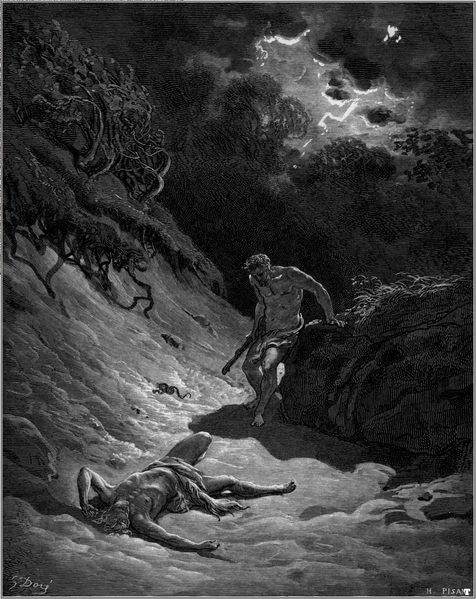
The Death of Abel, by Gustave Dore

Chapter 3 covers the story of Cain and Abel, who were the first sons of Adam and Eve. In a fit of jealousy, Cain killed Abel. Cain was scolded by God, who told Cain that as punishment he would wander the earth for life. (Thus he is interpreted to be the fore-father of the nomadic group Kenites.) Frightened, Cain told God that he, Cain, would be murdered by those who knew his deed. "Then the Lord said to him, 'Not so! If anyone kills Cain, vengeance shall be taken on him sevenfold.'" (Genesis 4:15)* This is why the Kenites, who were a brutal tribe, would kill seven people to avenge one of their own.

Monday, September 26, 2016

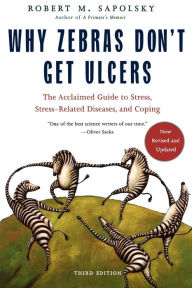
Why Zebras Don't Get Ulcers, by Robert Sapolsky


In this humorous and informative book, Robert Sapolsky explains how and why stress affects our bodies. The premise is that prey animals like zebras use a stress response in an evolutionary sensible way by upping certain hormones while they are being hunted, but then the zebras' stress levels drop again when they escape. Humans have the same bodily changes, only our stress tends to be small amounts for long periods of time, meaning the effects on the nervous system (lower digestion, higher blood pressure, reduced growth, etc.) remain continuously activated. Therefore, human stress is not sensible from an evolutionary standpoint. Each chapter in Sapolsky's book covers a different bodily system and explains in detail how and why stress affects it. He ends with a rather lengthy description of how lower socio-economic status affects our bodies. Although this section was interesting, it seemed a bit lengthy and out of place from the rest of the book. The subject could be a book all on its own. 

Sunday, September 25, 2016

How to Read the Bible, Chapter 2 by James L. Kugel

The Creation of Light, by Gustave Dore

The second chapter of Kugel's tome covers the creation of the world and the story of Adam and Eve (Genesis Chapters 1-3). 

Modern Biblical scholars theorize that the Pentateuch was actually accumulated from four sources: J (Jahwist or Yahwist), E (Elohist), D (Deuteronomist), and P (Priestly). Kugel discusses J and P in his second chapter. The P source is concerned with enumerating (for instance, counting the days of the creation in Genesis 1) and with priestly rules. It refers to God as "God" until the revelation of the name "Yahweh" to Moses later in the Pentateuch. The J source focuses on human corruption and the relationship between humans and the soil. It refers to God as "Lord God." For example: "Then the Lord God formed the man of dust from the ground." (Genesis 2:7)*

Saturday, September 24, 2016

Kitty's first vet appointment


It won't surprise anyone that knows me that I love cats. Sorry dear boyfriend, bunnies are just ok. And even less ok when they eat through the furniture. My precious little babies haven't destroyed anything yet. Except my bank account. This week I took all three of them to the vet. Boy is that expensive!